
Winter increases construction site risk because fewer people are on site, for fewer hours, in the dark, and that risk peaks over the Christmas and New Year shutdown when a site can sit unattended for a week or more. The answer is not one product. It is a documented mix of CCTV that keeps working once the light goes, guarding or patrols scaled to the site's actual risk, and a shutdown plan written and signed off before the last person leaves, not assembled the afternoon everyone downs tools.
Why winter changes the risk picture
The mechanics are simple and largely outside anyone's control. By the winter solstice, most of the UK gets under eight hours of daylight, and the further north the site, the less there is.[1] A site that runs an 8am to 4pm shift pattern in July is now working almost entirely in the dark at one end of the day or the other. Fewer people on site, less natural surveillance from passers-by, and longer hours of darkness combine to make plant, fuel and materials easier to move without being seen.
That pattern shows up in the industry data. Tool theft alone costs UK construction close to £100 million a year, according to the National Federation of Builders, and a 2025 survey by the Chartered Institute of Building found that just over half of construction sites surveyed had experienced crime in the previous twelve months.[2] Fuel theft has also risen sharply since red diesel access was withdrawn from most construction plant. None of this is unique to December, but the combination of long dark evenings and the extended closure over the festive period is when a badly secured site is most exposed.
CCTV: extending coverage through the dark months
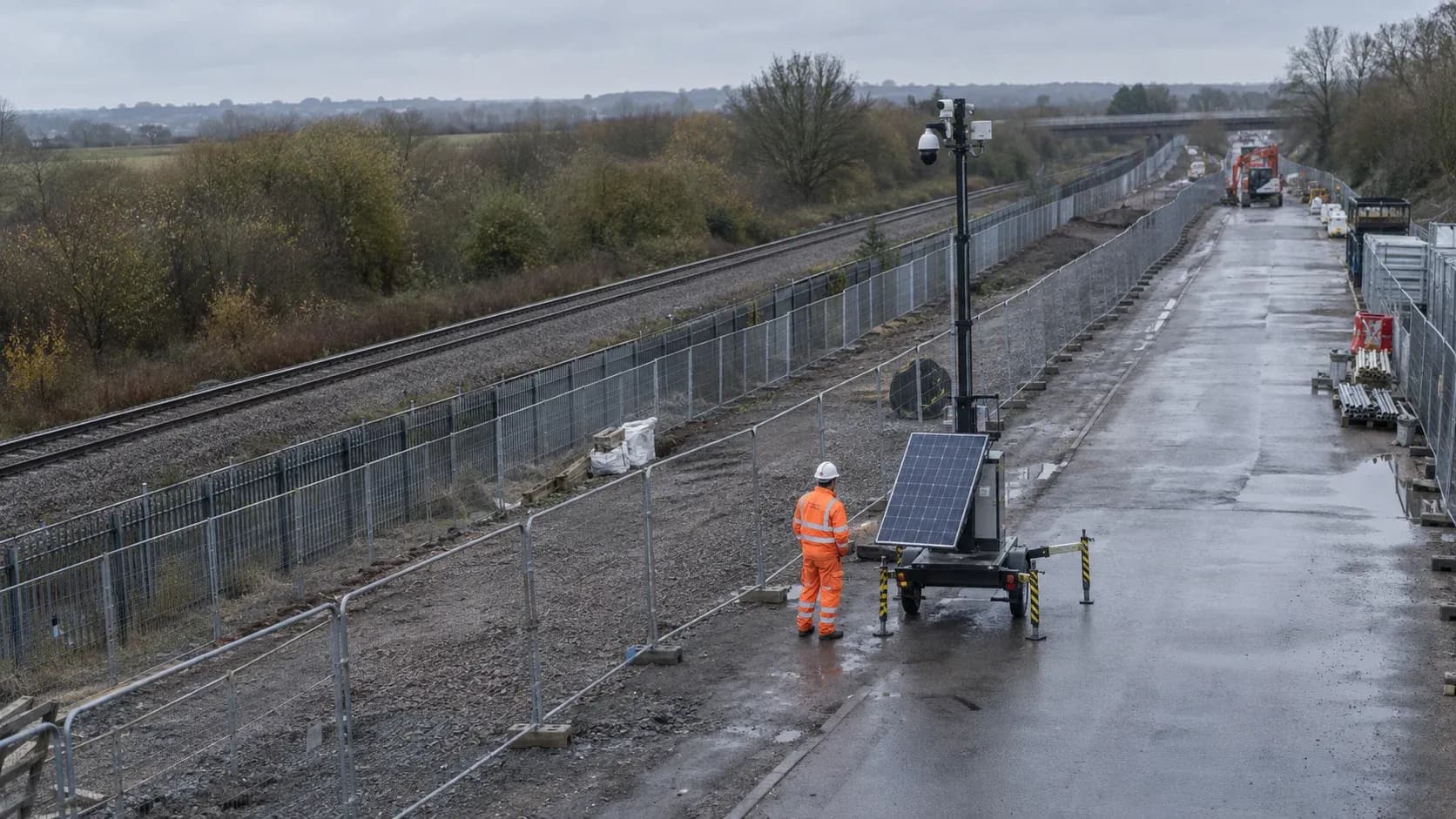
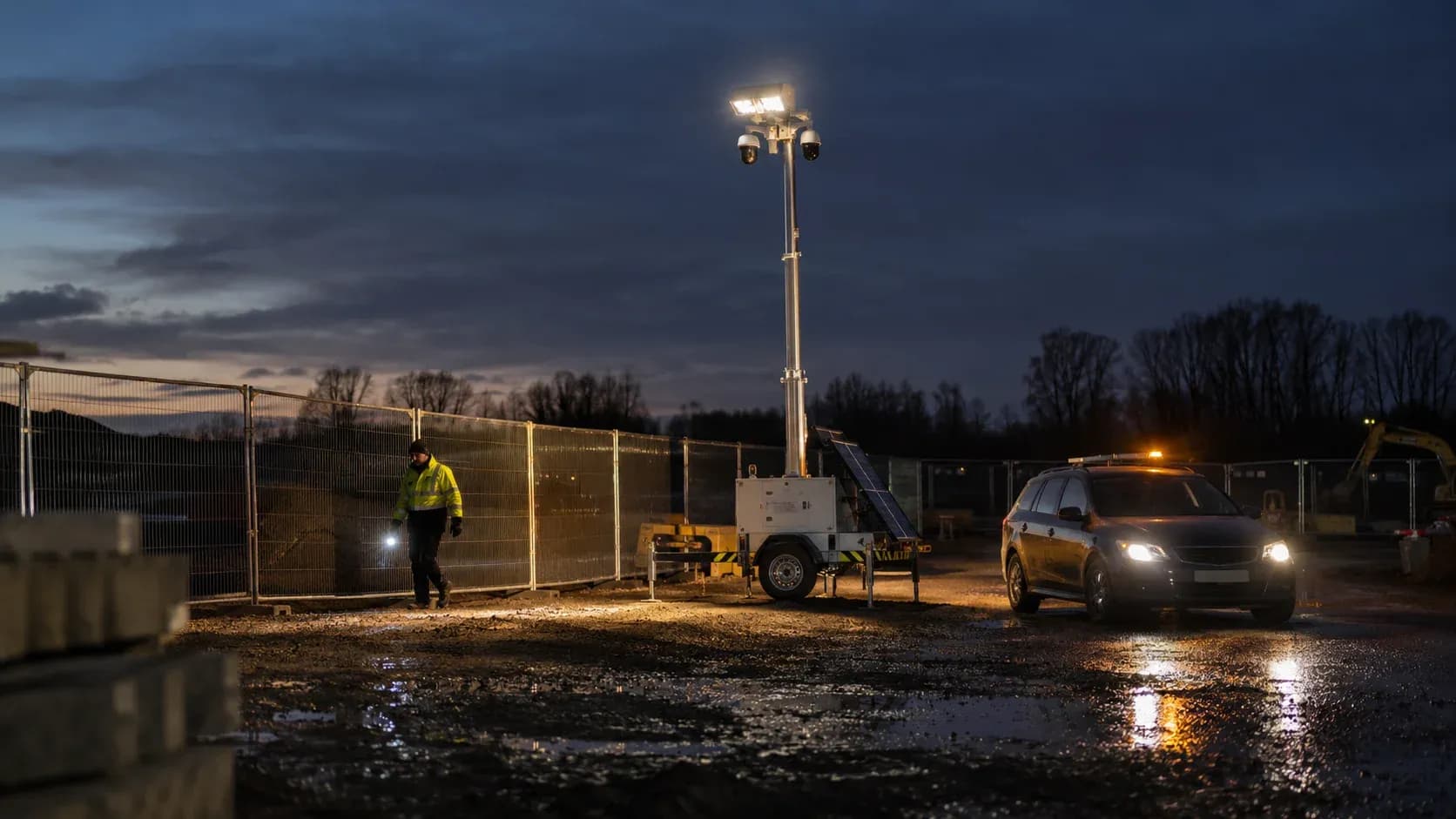
A camera that was adequate cover in summer daylight is not automatically adequate cover in December. Before winter, it is worth checking night detection performance, not just resolution, since a camera that produces a usable image at dusk can still be nearly useless by 9pm without the right infrared or low-light sensor. AOG's CCTV design and installation service starts from a site's risk profile rather than a fixed camera count, and integrates every feed into the AOG control room so footage is monitored, not just recorded and reviewed the next morning. Coverage should be reviewed specifically for winter: are perimeter cameras still covering the boundary once vegetation has died back and lighting has changed, and is the compound and fuel storage area covered from more than one angle in case one camera is obstructed or vandalised.
CCTV signage, ICO registration and DPIA-aligned configuration matter all year, but they are worth checking again ahead of winter alongside any camera or coverage change, since a system installed or adjusted mid-programme needs its compliance paperwork updated at the same time.
Guarding and patrols: matching presence to the risk, not the calendar
Static guarding puts a licensed officer physically on post, typically at the gatehouse or a high-value compound, and every officer working under a legitimate contract holds a current Security Industry Authority (SIA) licence.[3] Reputable providers also screen officers to BS 7858, the British Standard for security screening of individuals working in a secure environment. A static post is the right answer for a site holding high-value plant, fuel or materials overnight, particularly once the shorter days mean that "overnight" now starts mid-afternoon.
Mobile patrols are the proportionate alternative for a site that cannot justify a 24/7 static post: scheduled and randomised visits, checkpoint-logged, that increase in frequency through the darker months without the cost of a permanent presence. Neither approach is inherently superior. Police guidance on construction site security, published jointly by the National Business Crime Centre and the Metropolitan Police Service with the Considerate Constructors Scheme, recommends layered security combining trained, vetted guarding with visible CCTV and adequate lighting of perimeters, access points and vulnerable areas, rather than treating any one measure as sufficient on its own.[4]
The hybrid approach most sites actually need
Most live construction sites end up running a blend: CCTV covering the full perimeter continuously, with guarding or patrols concentrated on the hours and areas that carry the highest risk. AOG's out of hours security service combines static guarding, mobile patrols and monitored alarm response into one contract, which is often the right shape for a site that cannot justify 24/7 static presence but still needs more than an unmonitored camera once the working day ends. The point of the hybrid model is that the mix should follow the risk assessment for that specific site, not a generic winter package sold the same way to every client.
Shutdown-specific planning
The Christmas and New Year shutdown is the single highest-risk period most construction sites face, because it combines the longest run of consecutive unattended days with a widely known closure date. Good practice, reflected in the joint police guidance referenced above, includes enhanced perimeter checks before the site closes, confirming alarm systems are active and tested, removing or securing high-value plant and materials rather than leaving them in an open compound, and keeping regular site inspections running through the closure rather than treating it as a dead period.[4]
A named keyholder with a documented, verified response process is the other half of shutdown planning. AOG's key holding and alarm response service exists specifically for this: a defined attendance target, a logged response to every activation, and a single point of contact rather than a call left to whoever happens to be free over the holiday. Agree the keyholder, the escalation contact and the target attendance time in writing before the shutdown starts, not after the first alarm activation.
Pre-winter security checklist
- Confirm CCTV night detection and coverage against the current site layout, not the layout from when the system was installed
- Check external and perimeter lighting, including any temporary lighting on hoarding and access points
- Review guarding and patrol hours against the shorter working day, not the summer schedule
- Confirm the named keyholder, escalation contact and target response time in writing ahead of any closure
- Secure or remove high-value plant and materials from open compounds before a shutdown begins
- Register high-value plant with a recognised equipment marking and registration scheme, such as CESAR, so recovered items can be traced back to their owner[5]
- Test alarm activation and confirm monitored response is live before the last person leaves site
- Keep a written incident log through the shutdown period, even if nothing is reported
For the underlying question of what security a site needs in the first place, see AOG's companion guide, Construction Site Security: What Protection Does a Principal Contractor Actually Need?, and for CCTV specifically, Construction Site CCTV Buyer's Guide: 12 Questions to Ask Before You Appoint a Provider.
This guide is reviewed and refreshed each autumn ahead of the winter season, with daylight, theft and shutdown figures checked against the latest published sources before republication.
References
- Winter, the coldest season, Met Office, accessed 2026-09-02
- Government must act to tackle construction thefts, National Federation of Builders, accessed 2026-09-02
- Security Industry Authority, GOV.UK, accessed 2026-09-02
- Construction Site Security Guidance, National Business Crime Centre and Metropolitan Police Service, with the Considerate Constructors Scheme, accessed 2026-09-02
- CESAR, the construction and agricultural equipment security and registration scheme, CESAR Scheme, accessed 2026-09-02