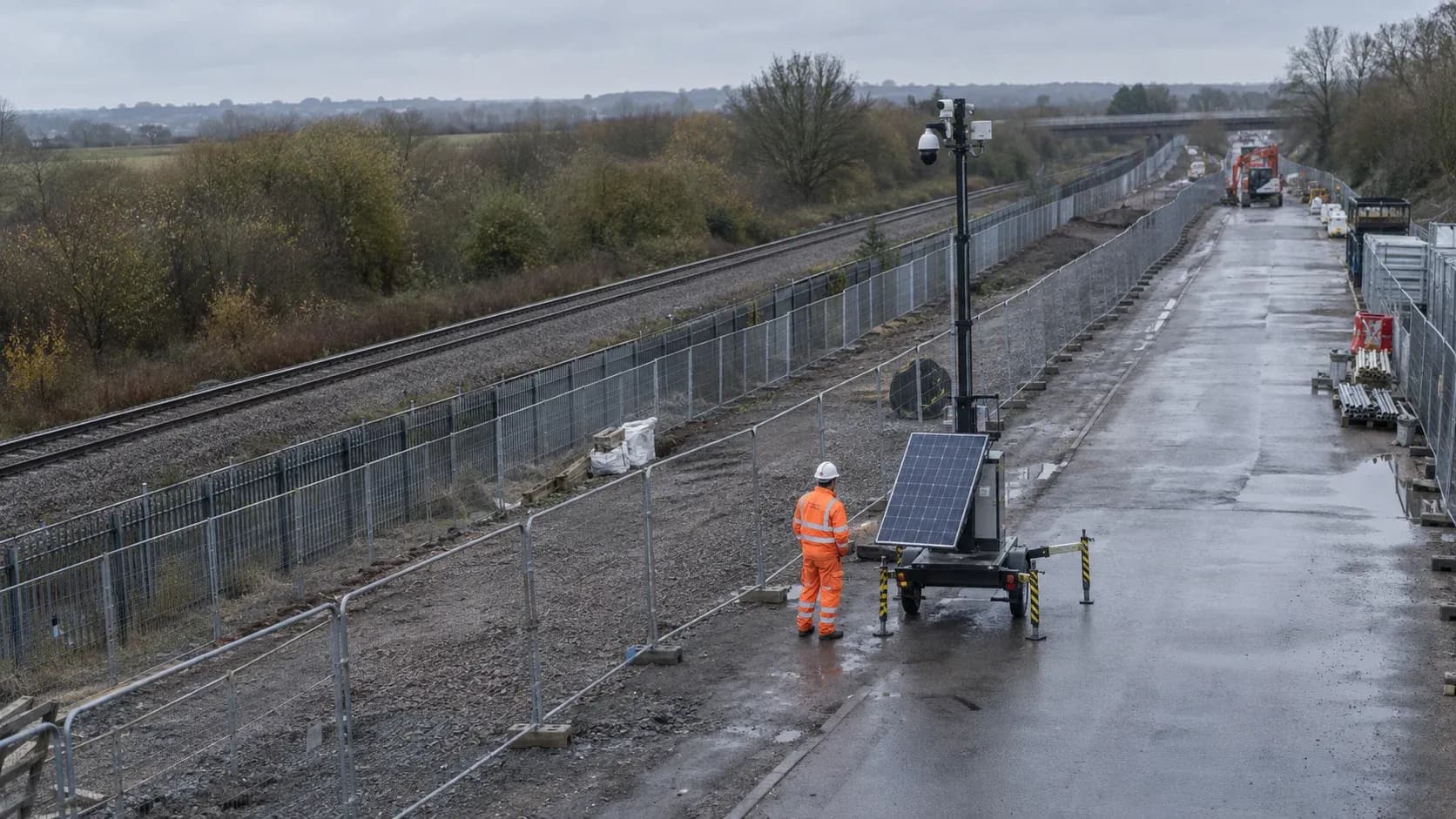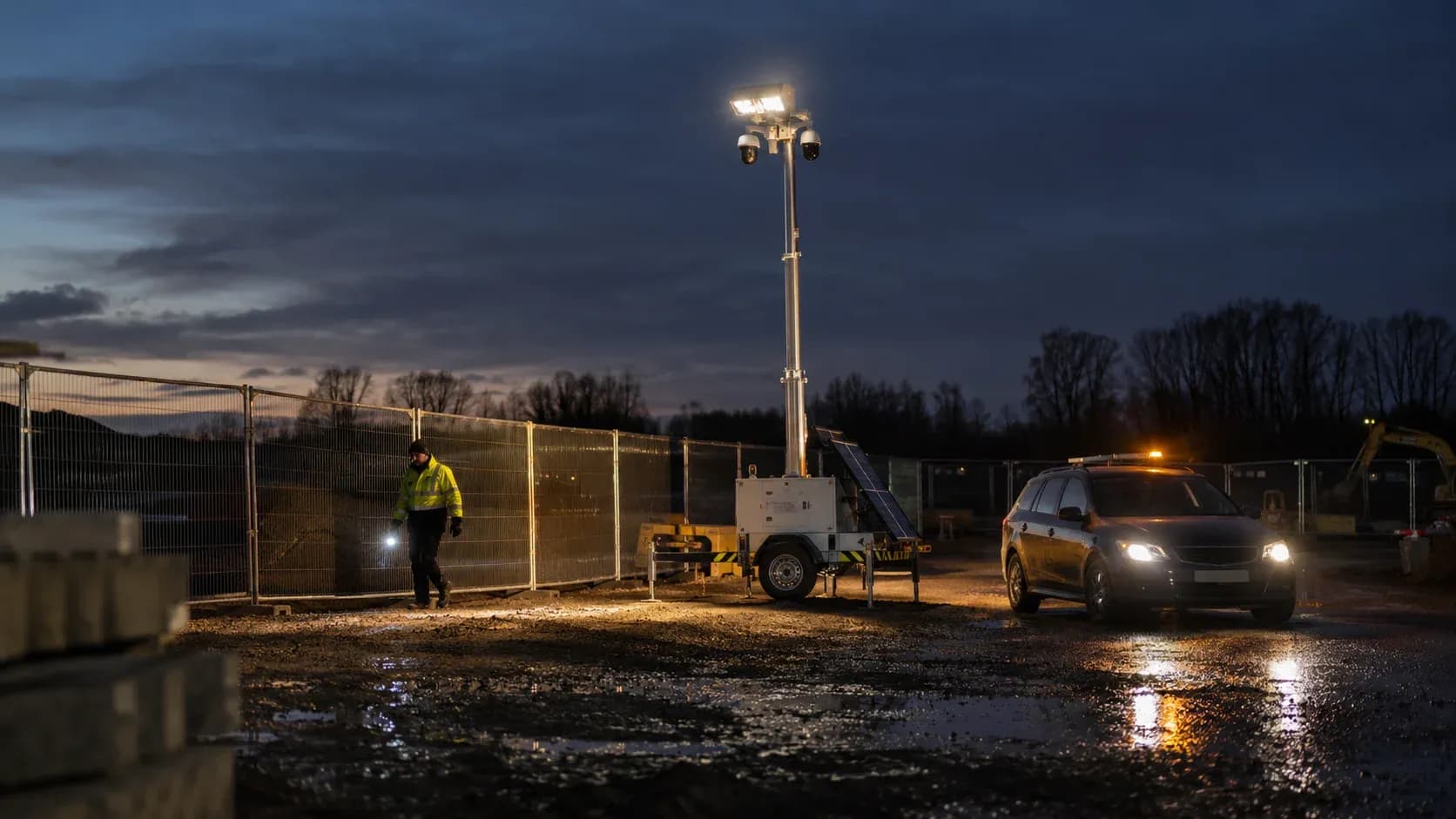


A principal contractor needs security sized to the site's actual risk, not a fixed package: a documented risk assessment, a secured perimeter and gatehouse, guarding or patrols matched to the phase of the build, CCTV where a permanent presence is not justified, keyholding for out-of-hours response, and a written incident log that stands up to an insurer or the Health and Safety Executive (HSE). What changes site to site is the mix, not the list.
Start with a risk assessment, not a shopping list
Every construction site carries a different threat profile depending on location, value of plant and materials on site, occupied or vacant neighbouring land, and how far the site sits from a public road. A security package built before that assessment is done is a guess dressed up as a quote. Under the Construction (Design and Management) Regulations 2015 (CDM 2015), the principal contractor already has to plan, manage and monitor the construction phase to control risk, including risks to the public from an unsecured site, so security planning sits inside that same duty rather than as a separate purchase.[1] HSE's own guidance on protecting the public is explicit about the baseline: secure the site properly at the end of each working day, isolate and immobilise vehicles and plant, and remove access to excavations, scaffolds and hazardous substances.[2]
Perimeter and hoarding
The perimeter is the first control, and it does two jobs: keeping the public out (a CDM 2015 duty in its own right) and slowing down anyone trying to get material or plant off site. Hoarding height, gate locations and sightlines should be planned against the site's actual boundary risks, not a standard fence line. On urban or high-footfall sites, hoarding also needs to account for pedestrian routes and any requirement from the local authority for signage and safe passage past the works.
Gatehouse and access control
A single controlled entry and exit point is the most effective access measure on a live site. A gatehouse, staffed or camera-monitored, lets you verify who is coming on site, log deliveries and visitors, and keep an accurate headcount for fire and emergency purposes. On larger or multi-contractor sites this also supports vehicle and plant tracking on and off site, which matters both for theft prevention and for managing traffic movements safely.
Guarding: static presence and mobile patrols
Static guarding puts a licensed officer on post, typically at the gatehouse or a high-value compound, providing a visible deterrent and someone able to physically intervene or challenge an unauthorised person. Every officer deployed under a legitimate security contract must hold a valid Security Industry Authority (SIA) licence, and reputable providers screen their officers to BS 7858, the British Standard for security screening of individuals working in a secure environment.[3][4] Mobile patrols are the lower-cost alternative for sites that cannot justify a 24/7 static post: scheduled and random visits, checkpoint-logged, are often the right fit for a site in its early groundworks phase or a smaller programme where a permanent presence would not be proportionate to the risk.
CCTV and remote monitoring
CCTV extends coverage across a perimeter that a guard cannot watch continuously, and a monitored system allows a control room to see and respond to an intrusion as it happens rather than reviewing footage the next morning. The choice between guarding, CCTV and a blend of both should follow directly from the risk assessment: a site holding high-value plant or fuel overnight usually needs both. The specific questions to ask a CCTV provider (monitored versus unmonitored, night detection, network resilience, GDPR compliance) are covered in AOG's companion guide on choosing a construction site CCTV provider.
How the mix changes across the build programme
The right combination of guarding, patrols and CCTV is rarely static across the life of a project, because the risk profile is not static either. During groundworks and enabling works, the perimeter is often at its most vulnerable (hoarding newly erected, low-value activity, few people on site to notice an intruder) while plant left overnight is a clear target, so mobile patrols with a monitored alarm are often proportionate. As the programme moves into superstructure and the value of materials and fixed plant on site rises, many principal contractors step up to a static gatehouse presence and add monitored CCTV across the compound and material laydown areas. At fit-out and toward practical completion, the risk shifts again, toward fixtures, fittings and finished areas rather than raw materials, and toward controlling who has legitimate access as multiple trades and visitors move through the building. Reviewing the security specification at each programme milestone, rather than fixing it once at mobilisation and leaving it unchanged, is what keeps the cover proportionate to the risk rather than either underprotecting a high-value phase or overpaying for a static post once the risk has moved on.
Keyholding and out-of-hours response
Once the site is locked up for the night, someone still needs to hold the keys and respond if an alarm activates. A named keyholder with a documented, verified response process, rather than a call left to whoever is free, is what an insurer and a site manager both expect to see. Response times are always location and contract dependent, so ask for the actual target attendance time in writing rather than accepting a general assurance.
Incident reporting: the paper trail that protects you
Every security measure above only has value if what happens is recorded properly. A written incident log, time-stamped and consistent across guarding, patrols and CCTV, does three things: it supports an insurance claim if theft or damage occurs, it gives the principal contractor an auditable record for their own CDM 2015 duties, and it is the evidence base if police involvement is needed. A security provider who cannot describe their incident reporting process, and how quickly a report reaches the site manager, is not giving you the full picture of what you are buying.
What to check before you appoint a provider
Before signing, verify the following rather than taking a sales pitch at face value: that officers' SIA licences are checked before the first shift, not after; that vetting is carried out to BS 7858; what the mobilisation timeline actually is, in days, from signed contract to officer on site; whether reporting is weekly and covers hours, patrols and incidents in one document rather than three separate ones; and what accreditations the provider holds and can evidence on request, since these clear pre-qualification checks without a delay to your own tender programme.
What this looks like in practice
On an 18-month residential development in the West Midlands, the principal contractor's insurance requirement specified SIA-licensed guarding, a monitored CCTV system and a documented incident response procedure for a 1.4-acre urban site with a recent history of trespass and tool theft nearby. AOG delivered three SIA-licensed officers, integrated CCTV and weekly reporting direct to the principal contractor, protecting a site valued at £18.4 million with zero theft incidents recorded across the build cycle.[5] That is the shape a properly risk-assessed package takes: guarding, CCTV and reporting sized to the site and specified against the actual risk, not bought as a fixed bundle.
Download the checklist
Construction Site Security Checklist — a free, 5-section checklist covering exactly this. Get the checklist →
References
- The Construction (Design and Management) Regulations 2015: Overview, Health and Safety Executive, accessed 2026-09-02
- Protecting the public, Health and Safety Executive, accessed 2026-09-02
- Apply for an SIA licence, GOV.UK, accessed 2026-09-02
- BS 7858:2019, Screening of individuals working in a secure environment, Code of practice, British Standards Institution, accessed 2026-09-02
- 24/7 secure perimeter for an 18-month residential build, West Midlands, Ascent Onsite Group case study, accessed 2026-09-02