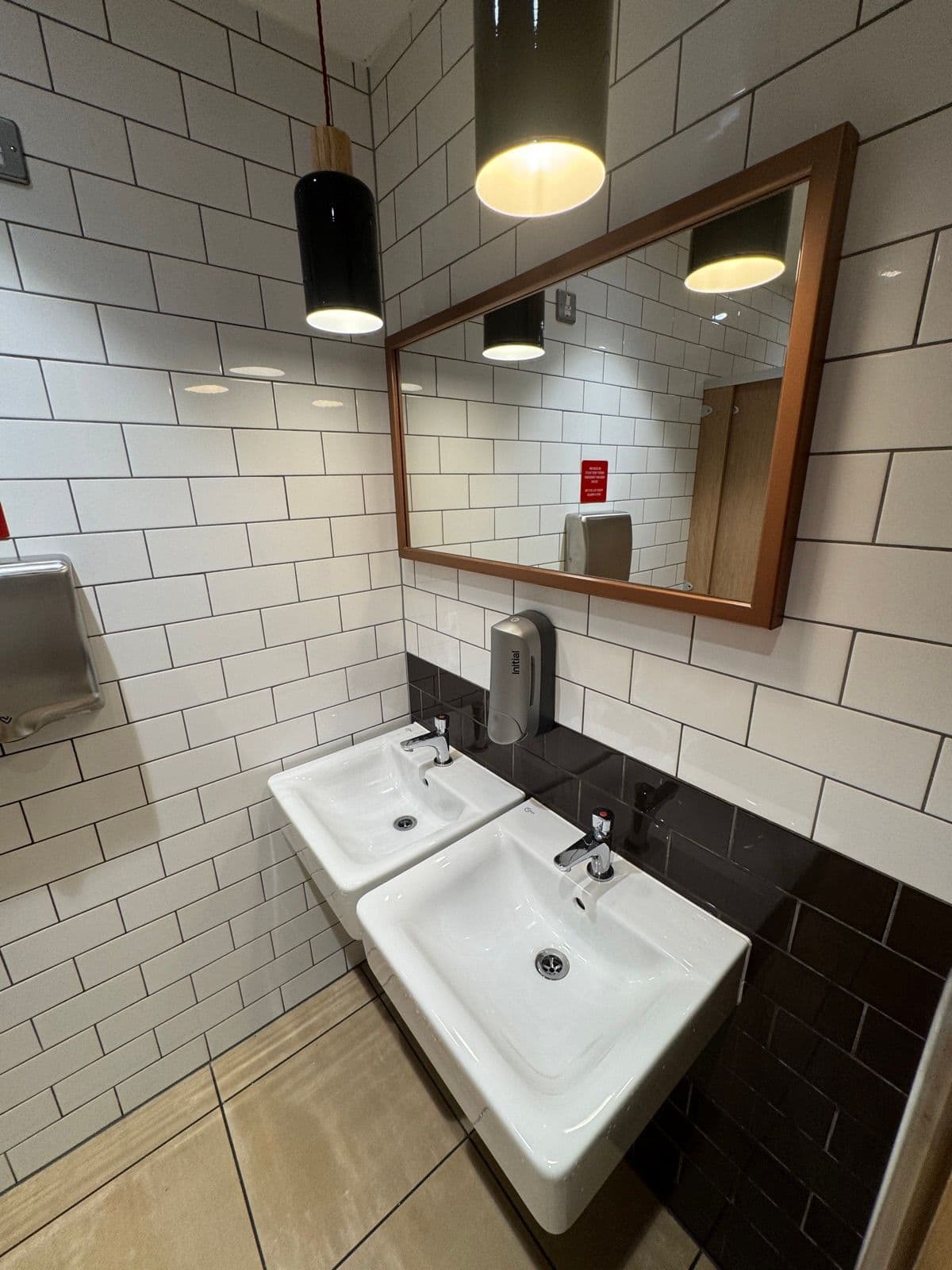


Winter changes what a commercial or retail cleaning contract actually needs to cover, not just how often it happens. Wet floors and tracked-in grit and salt raise slip and trip risk, higher footfall on wet days soils entrances faster, heating systems switching on after months idle push dust into the air, and shorter daylight hours change when cleaning teams can realistically work. A cleaning specification that does not flex for any of this is running the summer plan through the coldest, wettest and busiest months of the year.
Why winter cleaning is a different job, not just more of the same
Three things change at once from late autumn: the weather turns wet and cold, with UK winters regularly bringing sustained rain, frost and snow risk from December through February,[3] footfall patterns shift as people spend more time indoors and shopping habits change ahead of the festive period, and heating systems that have sat idle for months are switched back on. Each of these on its own would justify a review of the cleaning specification. Together, they mean a fixed, unchanged rota is very likely under-resourcing exactly the areas that matter most from November through to March.
Slip and trip risk: managing wet floors and tracked-in grit and salt
Slips, trips and falls on the same level are consistently the single most common cause of reported non-fatal workplace injury in Great Britain, accounting for 30 percent of all non-fatal injuries to employees reported under RIDDOR in 2024/25.[1] Wet and contaminated flooring is the leading driver, and the Health and Safety Executive is explicit that employers have a legal duty under the Workplace (Health, Safety and Welfare) Regulations 1992 to keep floors free of slip and trip hazards, which in winter means actively managing rainwater, tracked-in grit and salt residue, not just responding once someone has already slipped.[2]
Practically, that means entrance zones need checking and mopping far more often on a wet day than a dry one, wet floor signage needs to be used consistently rather than left folded in a cupboard, and any external grit or salt used to treat approach paths and car parks needs to be swept or matted out before it is walked deep into the building, where it becomes an abrasive floor hazard in its own right. Internal winter cleaning and external winter gritting are two different jobs run by two different teams, but they need to be scheduled together: AOG's grounds and external maintenance service runs forecast-triggered gritting on external hard standing, and coordinating that schedule with the internal cleaning team's entrance-zone frequency is what actually keeps the whole route safe, not just the bit outside the door.
Increased footfall soiling: entrance zones and matting
Wet weather brings more soil into a building per visitor, not just more visitors. Retail and commercial entrances see a sharp rise in tracked-in moisture, mud and grit through winter, and a matting system sized for summer footfall is usually undersized for winter conditions. The practical response is to extend the matting zone, increase the frequency of matting checks and replacement through the day, and treat the first several metres inside any entrance as a distinct zone with its own cleaning frequency, rather than folding it into the general floor round.
Heating systems, dust and indoor air quality
When a building's heating system runs for the first time after months of largely being off, it pushes dust that has settled in ducts, vents and on high surfaces back into circulation, and static from drier heated air makes that dust more likely to settle visibly on desks, shelving and display surfaces. A winter cleaning specification should build in a higher-dusting pass at the point heating systems are switched on for the season, not wait for it to become visible weeks later, and should keep an eye on filter and vent cleanliness where that sits within the cleaning team's scope rather than the M and E contractor's. AOG is a member of the British Institute of Cleaning Science, the industry's main professional and training body for cleaning methodology and standards, which is the kind of baseline that makes a seasonal adjustment like this consistent across sites rather than dependent on one supervisor's judgement.[4]
Scheduling: matching cleaning windows to a darker, wetter season
Shorter daylight hours affect more than external teams gritting car parks before staff arrive. Out-of-hours and early-morning cleaning windows that were comfortable in daylight in July are now running in the dark, which has knock-on implications for site access, lighting and lone-working arrangements for cleaning teams. AOG's daily contract cleaning service runs both day and out-of-hours cleaning to a written spec, and reviewing that spec ahead of winter, rather than after the first complaint about a wet entrance or an unlit access route, is what keeps the schedule matched to the conditions rather than catching up with them.
For the fuller picture of what a well-specified commercial cleaning contract should cover across the year, see AOG's guide, What Does Facilities Management Include? A UK Buyer's Guide to Hard and Soft FM, and for the current year's wider sector trends, UK Cleaning and Facilities Management Trends 2026.
Winter readiness checklist for FM and cleaning teams
- Increase entrance-zone mopping and matting-check frequency on wet days, rather than running a fixed daily frequency regardless of weather
- Extend matting coverage at main entrances to match higher winter footfall and moisture levels
- Confirm wet floor signage is stocked, visible and actually used at every entrance and high-traffic route
- Coordinate internal cleaning schedules with any external winter gritting programme, so treated grit and salt is not simply walked into the building
- Add a higher-dusting pass timed to when heating systems are switched on for the season
- Review out-of-hours and early-morning cleaning windows for lighting, access and lone-working arrangements as daylight hours shorten
- Check drainage at entrances and external hard standing is clear, so surface water does not pool at the door
- Confirm cleaning operatives working outdoors or in unheated areas have appropriate winter workwear and welfare arrangements
This guide is reviewed and refreshed each autumn ahead of the winter season, with the cited injury statistics and guidance checked against the latest published figures before republication.