
Facilities management covers everything needed to keep a building or site safe, compliant and running, split into two categories: **hard FM (the physical building: M and E, fabric, statutory compliance) and soft FM** (the services that keep people using the building safe and comfortable: cleaning, grounds, decorating, waste, pest control). A buyer evaluating a facilities services contract needs both covered, either through one provider or coordinated across several, with a single point of accountability for compliance either way.
This guide sets out what sits in each category, which parts are legally non-negotiable, and what to actually ask a provider before you sign.
The quick answer: hard FM vs soft FM
**Hard FM** is the maintenance and management of a building's physical systems and fabric: mechanical and electrical (M and E) plant, HVAC, electrical distribution, water systems, gas appliances, doors, windows, roofs, drainage and the external envelope. It exists to keep the building safe, compliant and structurally sound, and most of it is governed by statutory inspection and certification cycles a Responsible Person cannot opt out of.
Soft FM is everything that keeps the building usable and presentable day to day: cleaning, grounds and external areas, decorating, waste and environmental management, and pest control. It is less legally prescriptive than hard FM, but it is where a building's day-to-day condition, hygiene standard and first impression actually live, and increasingly it carries its own compliance layer too, particularly in healthcare and education settings.
A genuinely comprehensive FM contract has both. A provider who only quotes cleaning, or only quotes maintenance, is quoting half the job.
Hard FM: what's actually included
M and E planned preventative maintenance (PPM)
HVAC, electrical distribution, water systems and gas appliances serviced on a published schedule rather than run to failure. PPM is the difference between a compliance certificate that exists because an engineer turned up on the date it was due, and one that exists because someone remembered after a breakdown.
Fabric and building maintenance
Doors, windows, roofs, drainage and the external envelope, maintained on a planned cycle so deterioration is caught and fixed before it becomes a capital repair.
Statutory compliance: the non-negotiable part
This is where hard FM stops being a preference and becomes a legal duty on the building's Responsible Person or duty holder:
- LOLER (Lifting Operations and Lifting Equipment Regulations 1998): any lifting equipment on site needs periodic thorough examination, with records kept and defects reported.
- PUWER (Provision and Use of Work Equipment Regulations 1998): work equipment, including most lifting equipment, has to be safe, suitable and properly maintained.
- EICR (Electrical Installation Condition Report): periodic electrical safety inspection, typically every five years for commercial premises, less for higher-risk environments.
- Legionella and water hygiene: every duty holder has to identify and manage legionella risk under HSE's ACOP L8 and HSG274 guidance, which normally means a water hygiene risk assessment and a monitoring regime, not a one-off test.
- Fire safety: a Fire Risk Assessment under the Regulatory Reform (Fire Safety) Order 2005, plus the fire door, detection and compartmentation inspections that sit underneath it.
- Gas safety: annual safety checks on gas appliances by a Gas Safe registered engineer, with certification retained.
Asset register and tagging
Every M and E and fabric asset tagged, photographed and tracked through its service life, so a duty holder can see at a glance what is due, what is overdue, and what has just been fixed, rather than reconstructing that picture from paper job sheets when an auditor asks.
Sub-contractor management
Most estates need specialist trades: lift engineers, gas engineers, fire alarm specialists, that a single FM provider will not employ directly. What matters is whether those specialists are booked, inducted and certified under one contract with one point of accountability, rather than the client chasing five separate invoices and five separate compliance files.
Soft FM: what's actually included
Daily contract cleaning
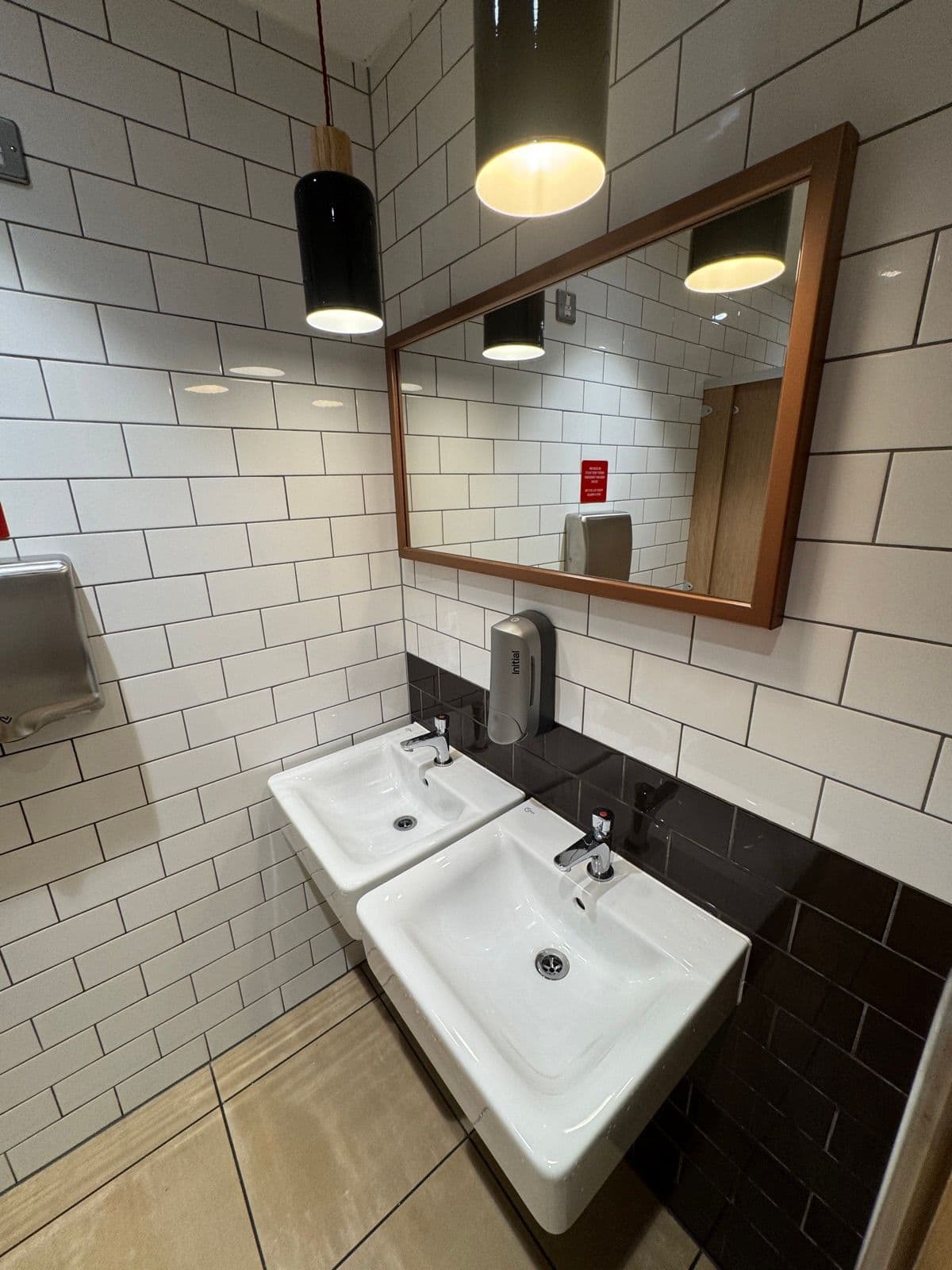
Office and commercial cleaning, washroom servicing and consumables, on a written cleaning specification, audited against that spec on a set frequency, with corrective actions tracked to closure rather than just noted.
Specialist and deep cleaning
Carpet and soft furnishings, hard floor restoration, high-level cleaning (ceilings, light fittings, ductwork access), washroom deep cleans, and post-works "sparkle" cleans ahead of handover or practical completion.
Grounds and external areas
Soft landscaping (grass, hedging, planting), hard landscaping (paving, kerbs, fencing), winter gritting, litter and leaf clearance, and external fabric cleaning: pressure-washing, gum and graffiti removal.
Decorating
Internal and external decorating on a planned multi-year redecoration cycle, plus reactive repair for scuffs and damage rather than waiting for the next scheduled repaint. In housing, this extends to void and end-of-tenancy repaints booked into the turnaround schedule.
Waste and environmental management
Segregated waste streams (general, mixed recycling, glass, food, confidential, hazardous), duty-of-care documentation (Waste Transfer Notes, consignment notes), confidential shredding, and diversion-from-landfill reporting.
Pest control
Preventative inspection and bait-point audit, reactive call-out, and proofing work so a treatment holds rather than needing repeating every few months.
Where security sits
Security (manned guarding, mobile patrol, CCTV, access control) is sometimes bundled into soft FM and sometimes run as its own specialist function. AOG treats it as a distinct division with its own SIA-licensed operating model, because the compliance and training requirements (SIA licensing, control room monitoring, incident escalation) sit closer to a dedicated security discipline than to general soft FM.
How hard and soft FM come together in one contract
The value of running hard and soft FM under one accountable structure is not just fewer invoices. A planned decorating cycle needs to be sequenced around M and E shutdowns. A deep clean ahead of a CQC inspection needs to be timed against the PPM schedule for the ventilation it depends on. A void turnaround in housing needs clearance, decorating and a compliance check to land in the right order, not three separate providers working to three separate calendars. That is what "total facilities management" is actually buying: one schedule, one compliance dashboard, and one person accountable when something is overdue.
Choosing a delivery model: bundled, self-delivered or multi-vendor
There are three common ways a UK estate actually buys FM, and the right choice depends on portfolio size and internal resource, not just price:
- Total facilities management (TFM), one provider, both hard and soft. The simplest model to manage day to day: one contract, one compliance dashboard, one point of escalation. The trade-off is that the provider needs genuine depth in both disciplines, not a soft-FM specialist subcontracting out the M and E work to whoever is available.
- Self-delivery. Larger estates with an in-house facilities team sometimes retain hard FM internally (or with a specialist M and E contractor) and buy soft FM separately. This works when the in-house team has the compliance capability to own statutory sign-off, but it puts the sequencing problem, timing a deep clean around a shutdown, say, back on the client.
- Multi-vendor, coordinated. Best-of-breed specialists for each service line, managed either directly by the client or through a managing agent. This can produce a stronger result per service line, but every additional vendor is another compliance file, another invoice and another point where accountability can blur if nobody owns the whole picture.
A useful test for any of the three: if something goes wrong at 2am on a Sunday, is it obvious who the client calls, or does the answer depend on which service failed?
Sector-specific FM considerations
- Healthcare. Clinical and patient-facing cleaning has to align to the National Standards of Healthcare Cleanliness 2025, with areas risk-graded and audited at a frequency matched to that grade, a different standard entirely from general commercial cleaning.
- Education. DBS-cleared cleaning teams, term-time routines built around the school calendar, and holiday deep cleans planned into the year rather than squeezed into a weekend.
- Housing. Communal-area cleaning (stairwells, lift lobbies, bin stores) on a published schedule, decorating tied to the void-turnaround programme, and grounds maintenance across estates rather than single buildings.
What to ask a provider before you sign
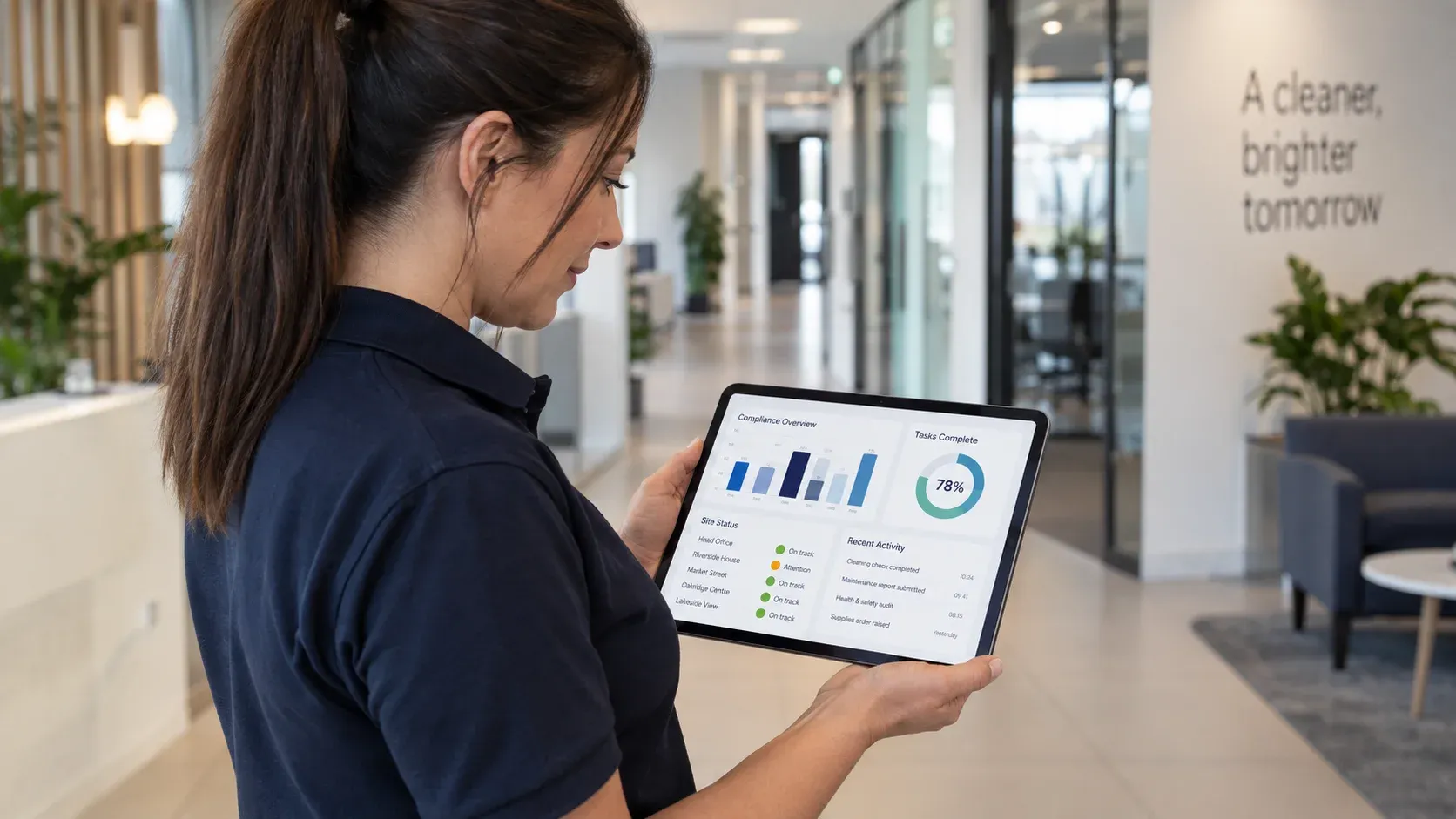
- Can you see a live compliance dashboard, due, completed and overdue, rather than a folder of certificates you have to audit yourself?
- Is there one named person accountable for both hard and soft FM on your contract, or two separate account managers you have to coordinate between?
- How are specialist sub-contractors (lift, gas, fire alarm) inducted, certified and managed under your contract?
- What is the audit frequency and corrective-action process for cleaning, and is it written into the specification or just implied?
- Can waste, energy and social value reporting be pulled straight into a tender submission, or does it need assembling from scratch each time?
Download the checklist
FM Tender Checklist — a free, 6-section checklist covering exactly this. Get the checklist →
References
- Lifting Operations and Lifting Equipment Regulations (LOLER): overview, Health and Safety Executive, accessed 2026-09-02
- Legionella and Legionnaires' disease, Health and Safety Executive, accessed 2026-09-02
- Legionnaires' disease: the control of legionella bacteria in water systems (L8), Health and Safety Executive, accessed 2026-09-02
- What is workplace and facilities management?, Institute of Workplace and Facilities Management (IWFM), accessed 2026-09-02
- National standards of healthcare cleanliness 2025, NHS England, accessed 2026-09-02
- BICSc, British Institute of Cleaning Science, accessed 2026-09-02