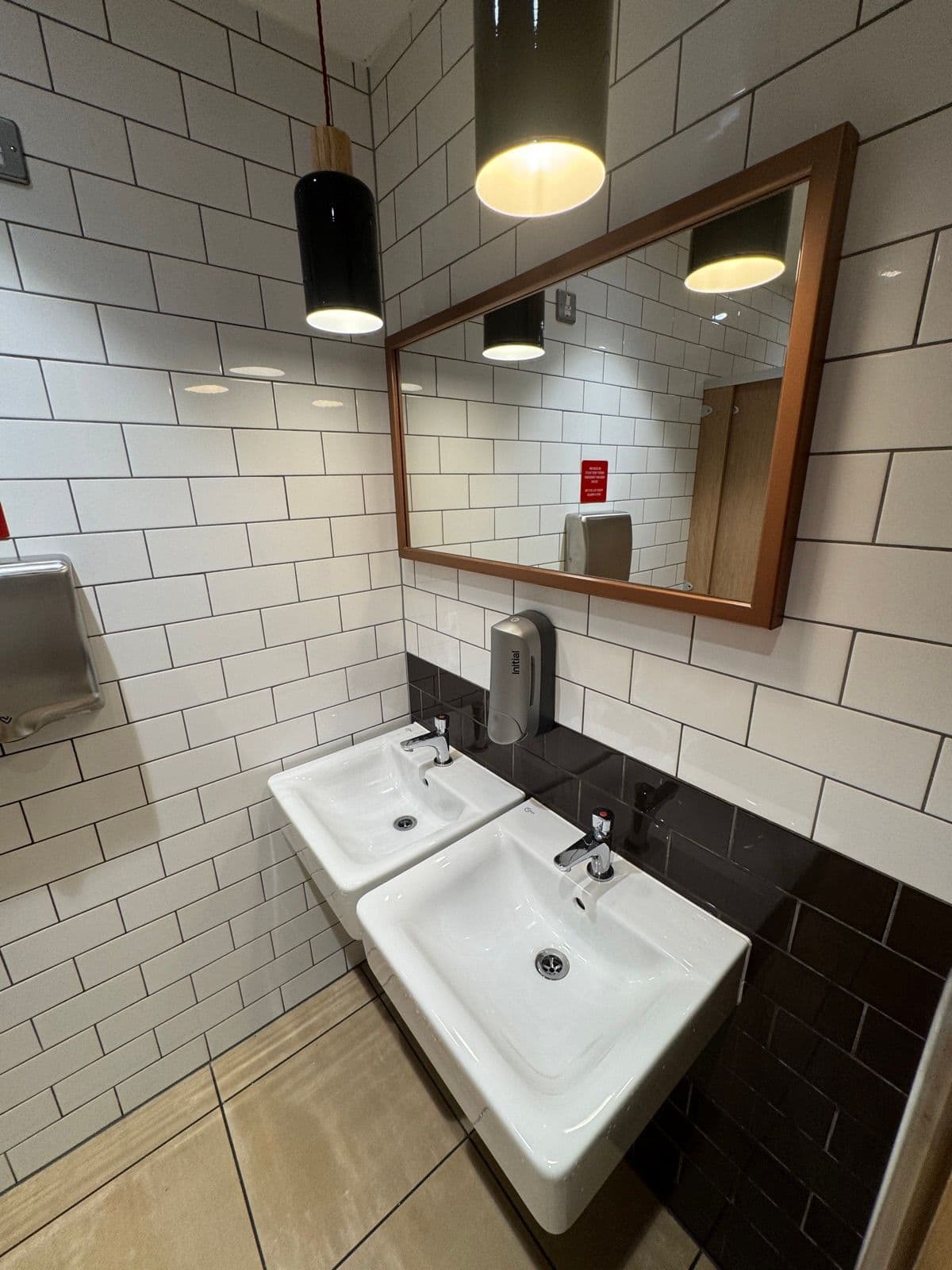


A builders clean and a sparkle clean are two different stages of the same handover, not interchangeable terms for "cleaning a new building." The builders clean removes construction debris, dust and residue so a space is safe and workable; the sparkle clean is the final, detail-level polish that makes it presentable for occupation, inspection or sale. Specify the wrong one, or only one, and you end up with a space that is either unsafe to walk through or superficially shiny over unresolved construction grime.
What a builders clean actually covers
A builders clean is the first clean a site gets after the main trades finish, and it is a heavy-duty operation, not a tidy-up. It typically covers:
- Removal of construction dust from every horizontal and vertical surface, including ledges, frames and light fittings
- Disposal of leftover packaging, offcuts and general construction waste
- Removal of paint splashes, plaster spatter and adhesive or label residue from glazing, ironmongery and fittings
- Cleaning of window frames, seals and glass to remove construction film and dust
- Sanitising kitchens, washrooms and welfare areas ahead of first use
- Removing floor protection and doing an initial polish of hard floor surfaces
This work matters for reasons beyond appearance. The UK's Health and Safety Executive treats fine construction dust, particularly respirable crystalline silica from cutting, drilling and demolition work, as a genuine occupational health hazard, and its guidance is explicit that dust clean-up itself needs proper control: wet sweeping or an H-class vacuum, not compressed air, which throws a fine dust cloud into the air rather than removing it (ref. 1). A builders clean carried out with the wrong method does not just leave a site looking rough, it can put whoever does the cleaning, and whoever walks through afterwards, at risk.
Because of the scale of debris involved, a builders clean is priced and resourced differently from routine contract cleaning. It usually needs a dedicated team working to a method statement, appropriate RPE, and enough time in the programme to be done once, properly, rather than repeated because dust settled again the next day.
What a sparkle clean actually covers
The sparkle clean happens after the builders clean, typically as close as possible to the point the space is handed over or occupied. It is a detailing pass focused on presentation rather than debris removal:
- Final glass and mirror polish, including any marks left by the builders clean itself
- Spot-cleaning of skirtings, door frames, switches and ironmongery
- Vacuuming and finishing of soft flooring, and a final polish of hard floors
- Dusting and wiping of all fixtures, fittings and surfaces at occupant eye level
- A final check of washrooms, kitchens and welfare areas to occupation standard
If the builders clean is about making a space safe and workable, the sparkle clean is about making it look finished the moment someone walks in. For residential developments this matters for show apartments, marketing suites and investor or purchaser walkthroughs. For commercial and public-sector buildings it matters for the client's first impression on the day they take the keys, and for any snagging inspection that happens around the same time.
Why the sequence matters
Doing these two cleans in the wrong order, or compressing them into one pass, is one of the most common ways a handover goes wrong. If other trades are still working when the sparkle clean happens, dust resettles on freshly polished surfaces and the client walks into a space that looks half-finished. If the builders clean is skipped or rushed to save time, the sparkle team ends up trying to detail-clean over adhesive residue, paint splashes and settled dust, which takes longer, costs more, and rarely produces an acceptable finish.
The right sequence is:
- Main trades and specialist works complete
- Builders clean, once the site is genuinely free of dust-generating activity
- Snagging inspection and remedial works
- Sparkle clean, timed as close to handover as the programme allows
- Final walk-through and handover
This is directly tied to practical completion. Practical completion in a JCT-form construction contract is the point construction law treats as "completion for all practical purposes," with only trifling, non-material defects (snagging) remaining, a principle confirmed by the Court of Appeal in Mears Ltd v Costplan Services (South East) Ltd (ref. 2). Cleaning that is planned around that milestone, rather than squeezed in as an afterthought once other trades have overrun, is far less likely to need repeating. For the detail of how to plan a cleaning programme against a practical completion date, including how much notice a cleaning contractor needs and how to coordinate access with other trades still finishing, see our companion guide, Pre-Handover Cleaning Programme: How to Plan Builders and Sparkle Cleans Around Practical Completion.
Scope boundaries: what neither clean typically includes
Both builders and sparkle cleans are one-off, project-based works, distinct from the ongoing contract cleaning that starts once a building is occupied. Neither typically includes:
- Ongoing daily or weekly cleaning once occupation begins
- Carpet deep extraction, hard floor stripping and sealing, or high-level cleaning above reach height, which are usually specified as separate specialist works
- Biohazard or decontamination response
- External grounds and hard-standing works
These sit as adjacent specialist services, planned into the same programme but priced and resourced separately. AOG's specialist and deep cleaning service, for example, explicitly covers post-works and sparkle cleans, including builder cleans and handover-ready finishes, alongside IPAF and PASMA-trained high-level cleaning, hot-water extraction carpet cleaning, and hard floor restoration, all aligned to the contractor's handover programme rather than treated as a single undifferentiated "clean the new building" job (see /services/fm-specialist-deep-cleaning).
Pricing factors: why one job can cost more than another
There is no fixed price for either clean because the variables are genuinely different site to site. The main factors that move price are:
- Volume and type of debris. A shell-and-core commercial fit-out with heavy dust and offcut waste costs more to builders-clean than a light residential refurbishment.
- Access and height. Glazing, high-level ductwork or atrium spaces that need IPAF or PASMA-trained access push cost up over a single-storey space cleaned from floor level.
- Programme compression. A cleaning window squeezed into a day or two because the programme has overrun costs more than one planned with proper notice, because it needs more operatives working in parallel.
- Specification detail. A sparkle clean specified against a written standard, with a defined snagging tolerance, is more predictable to price and deliver than a verbal "make it look finished" brief.
- Site conditions. Whether other trades are still active, whether welfare facilities are usable, and whether the site has power and water on, all affect how efficiently a cleaning team can work.
A buyer who briefs a contractor with the scope, access constraints and programme dates up front, rather than asking for a generic quote, gets a price that reflects the actual job, not a worst-case contingency built in because the contractor cannot tell what they are walking into.
What good practice looks like
The British Institute of Cleaning Science (BICSc), the UK's principal standards and training body for the cleaning industry, publishes cleaning standards and specifications covering soft floors, vertical surfaces and high-level cleaning that are widely used as the reference point for what "properly cleaned" means on a commercial contract (ref. 3). Specifying a builders or sparkle clean against a named standard, delivered by BICSc-trained operatives, gives both sides of the contract something concrete to check the finished work against, rather than a subjective judgement call at handover.
Download the checklist
Builders Clean Handover Checklist — a free, 4-section checklist covering exactly this. Get the checklist →