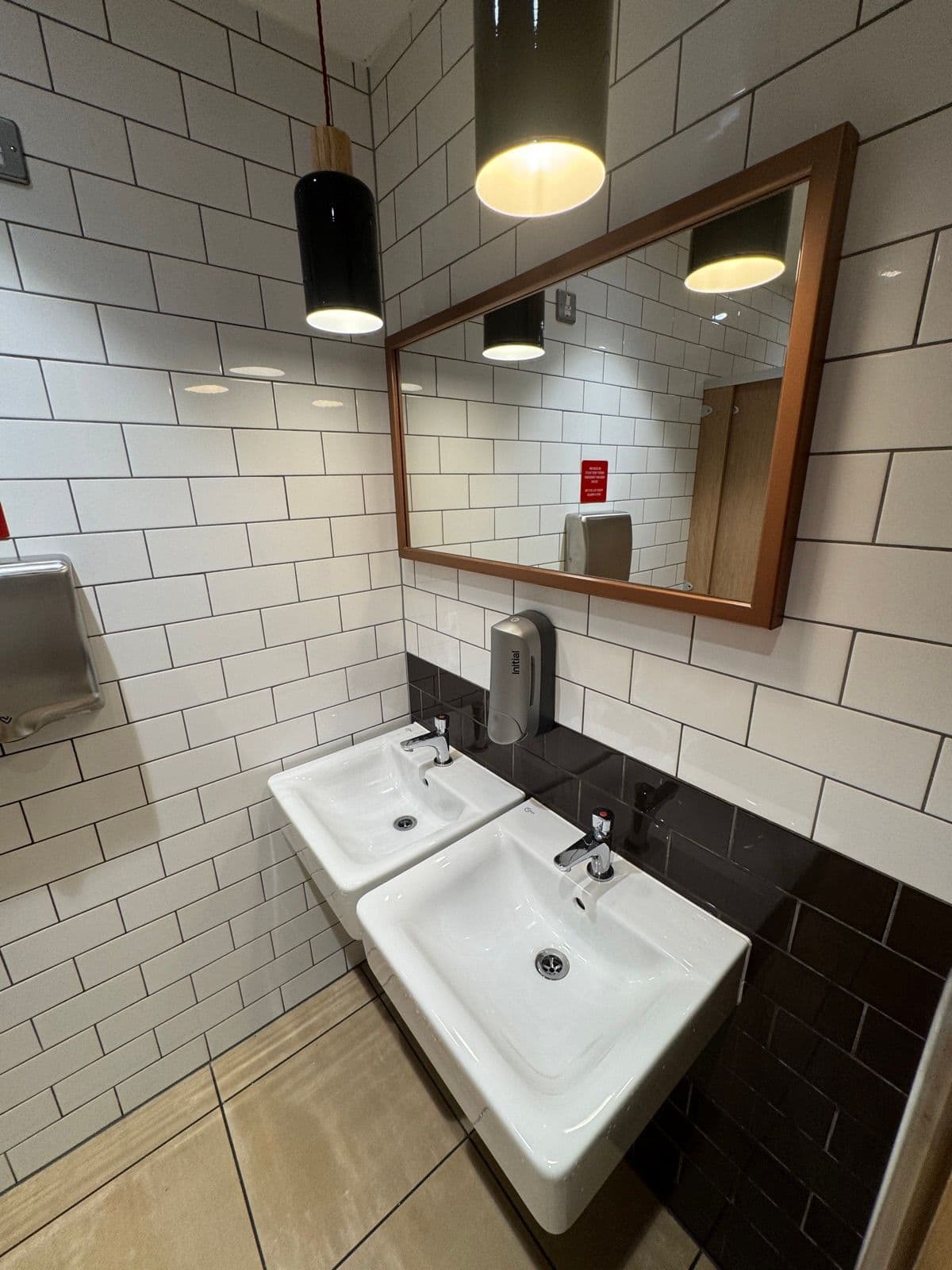


A builders clean and a sparkle clean are not one job done twice. They sit at different points on the construction programme, run to different specifications, and get undone by different mistakes. The builders clean happens once the dust-generating trades have finished but before final-fix and decoration are complete, removing construction debris, dust and residue so later trades can work in a clean space. The sparkle clean happens last, as close to practical completion as the programme allows, so nothing that follows it puts a mark back on a surface before the client walks in. Get the sequencing wrong in either direction and you either pay for a clean that gets undone or hold up the one date the whole programme is built around.
What practical completion actually means for a cleaning programme
Practical completion (PC) is the point in most UK building contracts where the works are complete enough for the employer to take possession and use the building for its intended purpose, with only minor, non-material defects outstanding. Under the JCT suite of contracts practical completion is deliberately left undefined, because JCT's own position is that it is "easier to recognise than to define" case by case, but the contract administrator or employer still has to certify it, and that certificate becomes a trigger date for retention release, the start of the defects (rectification) period and the point where responsibility for the building passes to the employer.[1] RICS guidance on defining completion of construction works exists precisely because that certification decision is judgement-based and contract-specific, not a fixed checklist.[2]
For a cleaning programme, the practical effect is this: PC is a fixed date the client is working towards, not a target you can quietly slip. If the space is not clean to a handover standard on that date, the cleaning contractor is the visible reason the building is not ready, even when the actual cause was a trade running late. The cleaning programme has to be built backwards from the certified or anticipated PC date, not forwards from when the site happens to feel finished.
Two cleans, two jobs, one sequence
The full definitional difference between a builders clean and a sparkle clean, what each one covers and what it costs, is set out in our companion guide, Builders Clean vs Sparkle Clean: What Is the Difference and When Do You Need Each?. For programming purposes, the short version is that a builders clean is a heavy-duty first pass, removing plaster dust, adhesive residue, packaging, protective film and general construction debris so the space is safe and workable, and a sparkle clean is the final, detail-level polish, cleaning glass, sanitaryware, ironmongery and floors to an occupier-ready standard immediately before handover. Sequencing them correctly matters more than either clean in isolation.
Scheduling the builders clean
The builders clean should run once the trades that generate the most dust and debris, first-fix electrics and mechanical works, plastering, screeding, painting preparation, are substantially complete, but before final-fix trades, carpet and flooring, and decoration finishing coats begin. Cleaning too early means the builders clean gets undone by the next trade in; cleaning too late means dust from earlier works is still being disturbed while finishing trades are trying to work in the space. HSE guidance on construction dust is explicit that dry sweeping construction debris "can produce high levels of dust", with peak silica exposure during dry brushing running well above the workplace exposure limit, and recommends damping down for small amounts and vacuum extraction fitted to an H or M class unit for finer material.[3] That is a health and safety requirement for the operatives doing the clean, not just a quality point, and it should be specified in the cleaning brief, not left to the contractor's discretion.
Scheduling the sparkle clean
The sparkle clean sits as late in the programme as the client's access will allow, ideally after the last trade has left site and before any client fit-out, furniture delivery or occupation. On a fixed opening date this window can be very tight. AOG delivered post-works and high-level cleaning to a fixed opening date for the 380-seat Graze building at Hartpury University, run on the same schedule as the daily cleaning contract already in place on site, which is only achievable when the sparkle clean is planned as a named task on the construction programme rather than an assumption that "cleaning will sort itself out at the end". The tighter the opening date, the earlier the cleaning contractor needs the confirmed final-trades sequence, not the earlier the clean itself should run.
Snagging period cleaning
Practical completion rarely means every trade is finished for good. The defects or rectification period that follows PC brings snagging trades back on site to fix items on the snag list, and each of those visits can re-dirty finished areas, a plasterer patching a wall, an electrician replacing a faceplate, a joiner adjusting a door. Build a light touch-up clean into the programme after the bulk of snagging visits, rather than either leaving marks in an occupied building or paying for a full second sparkle clean. Agree with the principal contractor in advance which party is responsible for making good the mess a snagging trade leaves behind, since this is one of the most common points of dispute after handover.
Coordinating with other trades finishing up
The single biggest risk to a handover cleaning programme is a trade overrunning into the cleaning window. Confirm a genuine "last trade off site" date with the principal contractor, not the date on the original programme, and build in a short buffer before the sparkle clean starts. Ask who is removing hoarding, protective floor covering and signage, and when, since a sparkle clean run before protective covering comes off is largely wasted. On multi-trade handovers it is worth naming a single point of contact on the contractor side who confirms, in writing, that the space is genuinely clear for the final clean to begin.
What goes wrong when cleaning is not programmed properly
Two failure patterns show up repeatedly. The first is cleaning too early: a sparkle clean is delivered against the original programme date, a trade then overruns into the space, and the client walks into a building that looks like it was never cleaned, because in effect it was undone. The second is cleaning too late: the cleaning contractor is only briefed once the building is already substantially complete, has no visibility of the true final-trades sequence, and either delays the handover or is forced into an unplanned, higher-cost out-of-hours push to hit the date. Both are avoidable with the same fix, treating the cleaning programme as a dependency on the construction programme with its own confirmed dates, not an afterthought booked once everything else is done.
Briefing a cleaning contractor for a handover programme
A principal contractor or client briefing a cleaning provider for a handover should set out, in writing: the anticipated or certified PC date and how firm it is, the confirmed last-trade-off date and who owns updating it if it slips, the split between the builders clean and the sparkle clean and where each sits against the trade sequence, any high-level or restricted-access areas that need IPAF or PASMA-trained operatives, and provision for a touch-up clean during the snagging period. For a wider view of what should be in any commercial cleaning contract beyond the handover, including how to compare providers on spec rather than price alone, see our guide, Commercial Cleaning Contracts: What Should Be Included and How Do You Compare Providers?
What this looks like on an AOG handover programme
AOG's specialist deep cleaning service covers builder cleans, post-refurb sparkle and handover-ready finishes explicitly aligned to the contractor's handover programme, rather than treated as a generic deep clean booked once the site looks finished. High-level work runs through IPAF and PASMA-trained teams, which matters directly for pre-handover dust removal from ceilings, light fittings and ductwork access before a sparkle clean can be signed off. On the retail side, AOG has delivered builders and reopening cleans across 60 Costa Coffee stores over three years, every site run to the same written specification and audited weekly, with zero reportable accidents across the programme, evidence that a handover cleaning programme can be run at volume without the sequencing risk described above, provided it is briefed and programmed as its own workstream from the outset.
Download the checklist
Builders Clean Handover Checklist — a free, 4-section checklist covering exactly this. Get the checklist →