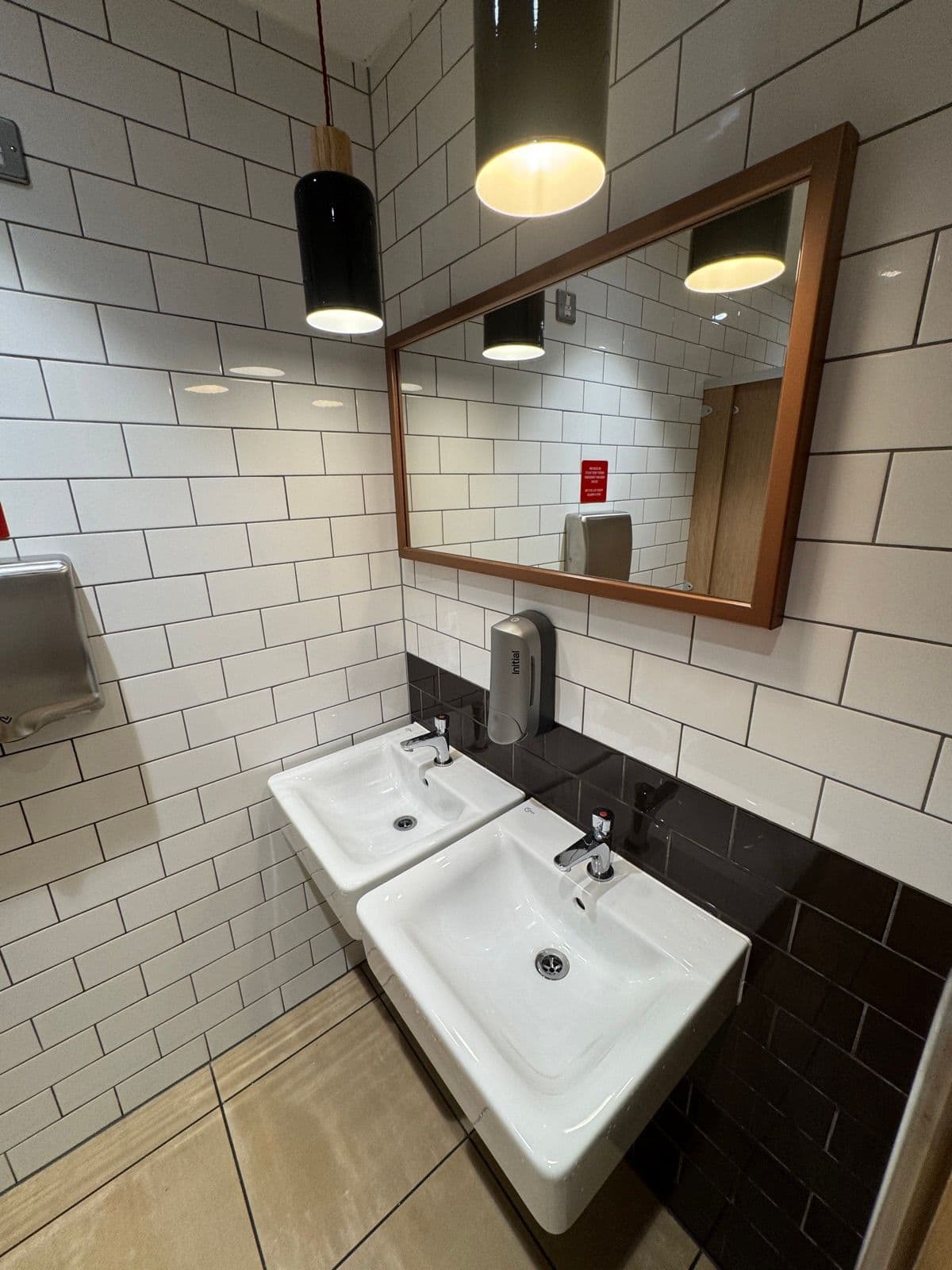


After winter, commercial buildings carry months of dust, salt, and mud that routine cleaning never fully clears. A spring deep clean resets the building, protects its surfaces, and increasingly forms part of a planned, preventative approach to facilities.
A spring deep clean matters because winter leaves commercial buildings with a build-up of dust, mud, salt residue, and higher bacteria levels that daily cleaning does not reach. Deep cleaning resets those surfaces, extends their life, and, according to the British Cleaning Council, plays a critical role in maintaining workplace wellbeing. Here is what the work covers and how the market is changing.
Why buildings need it after winter
Closed windows, wet footfall, and salted paths mean winter deposits accumulate in ways routine cleaning cannot address. Carpets hold ground-in grit and salt, hard floors dull, washrooms scale, and poorly ventilated areas grow damp. Left alone, that build-up shortens the life of finishes and creates the conditions for mould. A spring deep clean clears the accumulation before it does lasting damage.
What a commercial deep clean covers
Spring cleaning goes well beyond the daily specification. A proper deep clean typically includes high-level dust removal, carpet extraction, floor stripping and resealing, washroom descaling, internal and external window cleaning, kitchen sanitation, and external pressure washing. The aim is to reach the surfaces and heights that routine cleaning is not scheduled to touch.
The shift to preventative maintenance
Facilities management is moving from reactive cleaning toward planned, preventative programmes. Rather than waiting for surfaces to deteriorate, estates teams schedule deep cleans to extend the lifespan of carpets, floors, and fittings and to head off problems such as mould before they take hold. A seasonal deep clean is one of the clearest expressions of that preventative mindset.
Outsourcing and specialist access
More UK organisations are contracting specialist providers for deep cleaning rather than stretching in-house teams to cover it. The reason is capability: deep cleaning needs equipment such as extraction machines and high-level access systems, plus operatives trained to use them safely. Outsourcing gives buildings access to both without the capital cost of owning the kit.
Sustainability and compliance built in
Spring 2026 deep cleans increasingly use water-efficient methods and low-toxicity products, reflecting the sustainability expectations now written into most contracts. Compliance is a driver too: the Health and Safety Executive treats seasonal deep cleaning as part of maintaining a safe workplace, so the work supports duty-of-care obligations as well as presentation.
Plan it around your operation
The practical challenge with a deep clean is disruption, since stripping floors or extracting carpets cannot happen mid-shift. The trend among well-run estates is to book the work into quieter periods or out of hours and to phase it area by area, so the building keeps running while it is reset. A provider that surveys the site first and schedules around your operation delivers the same result with far less interruption.
The payoff is straightforward: better hygiene, stronger presentation, longer asset life, and improved wellbeing for the people inside. AOG delivers planned spring and deep cleaning for commercial properties across the West Midlands and nationally, with specialist equipment, trained teams, and sustainable methods.